text area

Keeping Cost of Living Affordable

Addressing the Problem of High Cost of Living

The high cost of living in Singapore is caused by the over-taxing and over-charging budget policies of the government over the years.

The haste to hike the GST in 2023 and 2024 amid accelerating global inflation is an example of over-taxing.

Over-charging takes place in all aspects of our lives – water, electricity, transport, healthcare, and most significantly, HDB prices and retail rentals.

PM Lawrence Wong has said during the Budget 2025 debate that the government starts with determining a price for everything and then offers a discount to ensure affordability. The problem is the price is often set at too high due to a combination of the market forces and government policy framework. As a result, the price is unaffordable for many Singaporeans even after the discount.

Over-taxing is reflected in the persistently high budget surpluses chalked up by the government, overcharging is reflected in the enormous profits chalked up by utility companies like PUB and Singapore Power.

Budget surpluses are good only as long as Singaporeans can manage well too. When Singaporeans are not managing well, PSP’s preferred policy is to lower taxes and fees to empower Singaporeans to plan their own finances rather than feeding them with temporary ad hoc handouts.

The high cost of living of everything has increased stress and is often cited as the top reason why young families are not bearing and raising children.

So in the long run, we face the threat of a Singapore without a Singaporean core.

We need to fix things now, for Singaporeans of today and in the future to come.
Hoarding the reserves at the expense of Singaporeans' wellbeing

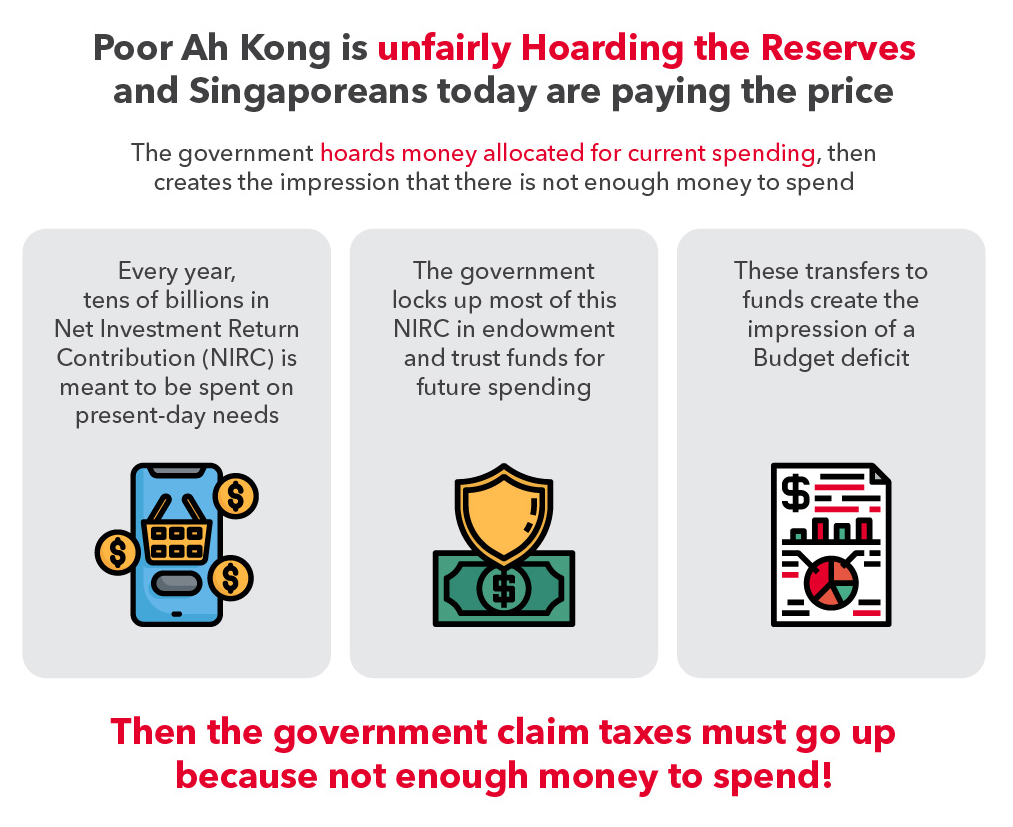
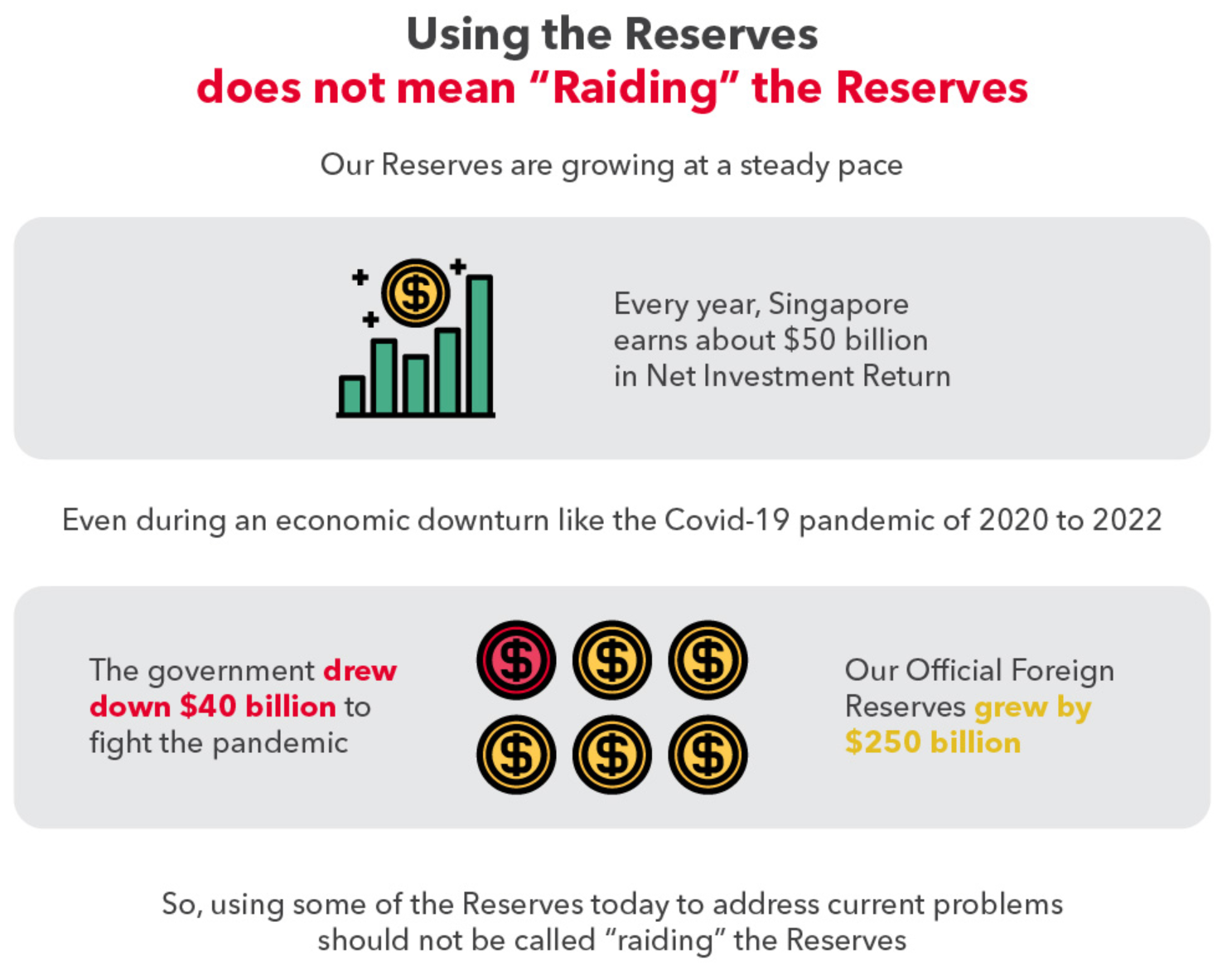
The government earns $50 billion every year from the investment of the reserves.

Out of that, $25 billion is dedicated to spending on present-day needs (the Net Investment Return Contribution, or NIRC).

But instead of using all of this $25 billion for needs of Singaporeans today, the government locks up portions of it.

Then, it claims that there is not enough to spend, so taxes like GST must increase.


This is what I mean by “overtaxing”. Such overtaxing is unfair to present-day Singaporeans.

There is enough money available to help tide families through the current Cost of Living Crisis.

But at this time, the government chooses to raise taxes such as GST, water tax and property tax instead.

The government claims that it must save “responsibly” and not allow the opposition to “raid the reserves”.

But the government has conveniently left out that the NIRC has not been put to use fully. The NIRC represents half of the Net Investment Return earned from the reserves.

The NIRC has been promised by the Government for use for the current generation. 

As PSP has only recommended to make better use of the NIRC, the accusation “raiding the reserves” is a red herring.


Since Singapore’s reserves is growing sustainably, and the government has excess funds from the NIRC, it is a fair request that more of these funds are used to help ease the burden of high cost of living.

This is why I propose to allocate more from the Budget to help struggling families, and why I have fought in parliament to delay tax hikes until such time that they are necessary.

Land cost for public housing is overtaxing and overcharging

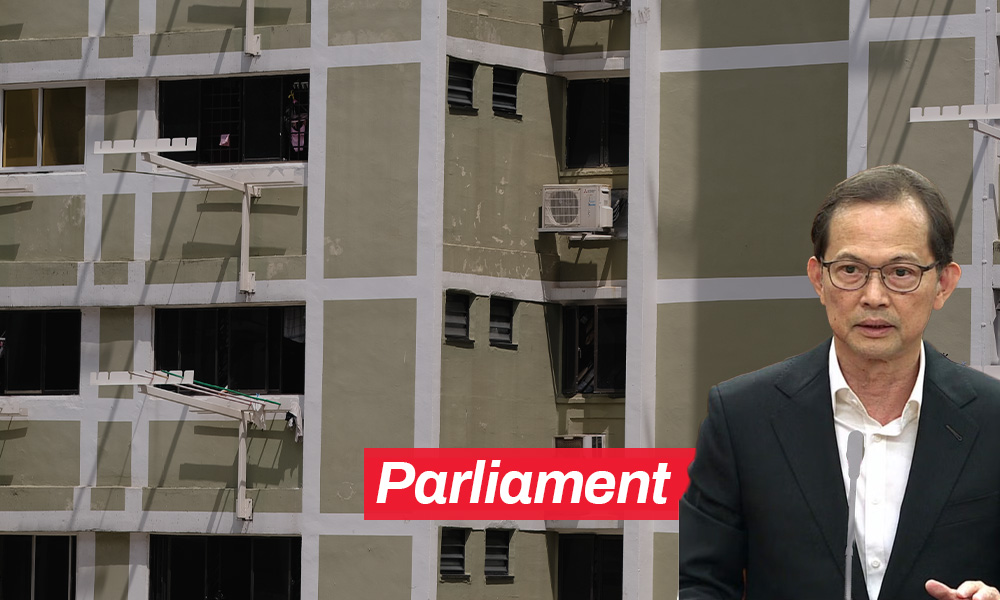
Rising land cost, not construction costs, is the key reason for the high and yet increasing prices of new HDB flats.

But the government, through the Singapore Land Authority, is the one that determines the value of land.

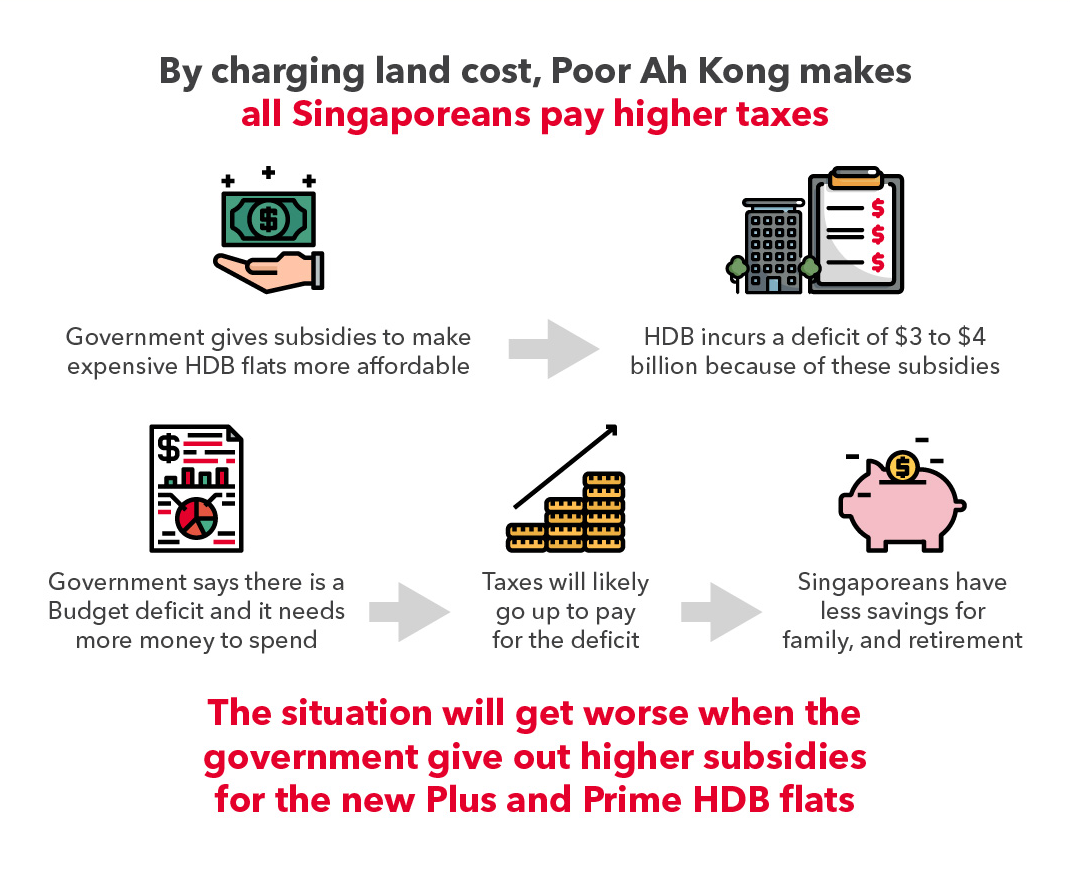
The government persists in charging land cost for new HDB flats, while giving out higher subsidies to keep these flats “affordable”.

This results in all Singaporeans having to pay higher taxes because of the huge HDB deficits arising from these subsidies.

Singaporeans are being overcharged for new HDB flats because the government can remove land cost altogether and not have to hand out subsidies.

The government says that revenue land sales go into the reserves, and so it is fiscally responsible to charge Singaporeans for land cost for public housing.

But, removing land cost will also mean less HDB deficit and more budget surplus which will make up for the land cost shortfall. In total, there is little impact on the growth of reserves, let alone drawing down of reserves. 

Lowering the cost of overpriced new housing developments has such a significant impact on cost of living, our retirement savings, and the longevity of born-and-bred Singaporeans that I’ve devoted a whole section here to it alone.

Centered around removing land cost from the sale of new HDB flats, I’ll show you why this is an important reform, and how it will save families some $300,000 in costs so they can build a home and save effectively for retirement without having to bank on an unfair “lottery effect”.

Cruelty in the midst of a Cost of Living Crisis

I don’t know if Elon Musk was joking when he said that Singaporeans could soon become extinct.
 
But what I do know is that there have been many reports over the years where families cite the suffocating cost of living as their top reason for not wanting to raise children.
 
When I look at cost of living, I’m looking at 2 aspects – how much you can spend now, and how much you can save for the future. Both situations appear bleak for working class Singaporeans and the sandwiched middle-income earners.
 
The government’s duty is to take care of the people, not to unfairly punish the people.
 
During our present-day Cost of Living Crisis, the government raised GST, water tax, S&CC, petrol tax, and property tax. PAP leaders in government also somehow saw it fit to levy e-commerce tax and carbon tax. All these taxes impact us directly through higher bills, or hit us in the pocket as small business owners like our hawkers, have to raise prices to make ends meet.
 
I find this unconscionable. Especially, when the government can do so much more to help struggling families tide through this crisis while still saving billions in the Reserves over the years.

Other Rising Costs and Hidden Costs that Threaten Our Retirement Savings

Adding to Singaporeans’ burden is the rising cost of healthcare, and premiums for MediShield Life and CareShield Life premiums. These costs are heavy and uncertain for most of us.

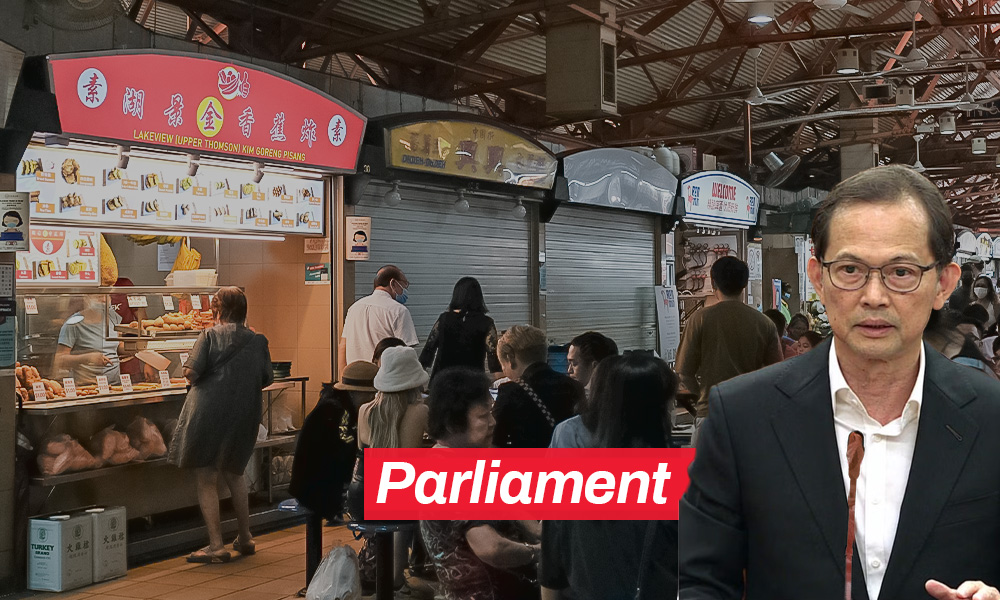
Hawker food has become more or less a staple for Singaporeans, in particular working class and middle income Singaporeans. Yet, hawker food prices have soared by some 30% in the past 2 years alone, in part due to the government’s failed SEHC scheme.

Then, there’s high cost of public housing, which results in young families losing potentially about $300,000 in retirement savings by the time they turn 60.

Meanwhile, all of us have to foot part of the bill for these overpriced BTO flats, in the form of yet higher taxes.

Stop Unfairly Hoarding the Reserves

Singapore’s reserves is the savings of generations of Singaporeans. With our birth rate hitting yearly all-time-lows, you have to wonder who the government is hoarding all this money for.

Even in a severe economic downturn like the Covid-19 pandemic, earnings from the reserves grew at a steady rate. There was no dent at all!

When Singaporean are suffering through a Cost of Living Crisis, it is simply unfair and irresponsible of the government to hoard the earnings from the reserves.

Especially, when ex-Prime Minister Lee Hsien Loong said during my parliamentary motion on the reserves that the government made an arbitrary decision on how much of the earnings should be used every year for present-day spending. It wasn’t some meticulous calculation, just what the government thought was correct.

Then, if you look deeper in the Budget, at the amount that is meant to be used for present-day spending, you will discover that millions are locked up in various  “endowment funds” for future spending. How is this fair?


Use Our Savings Earnings Efficiently to Unite Singaporeans

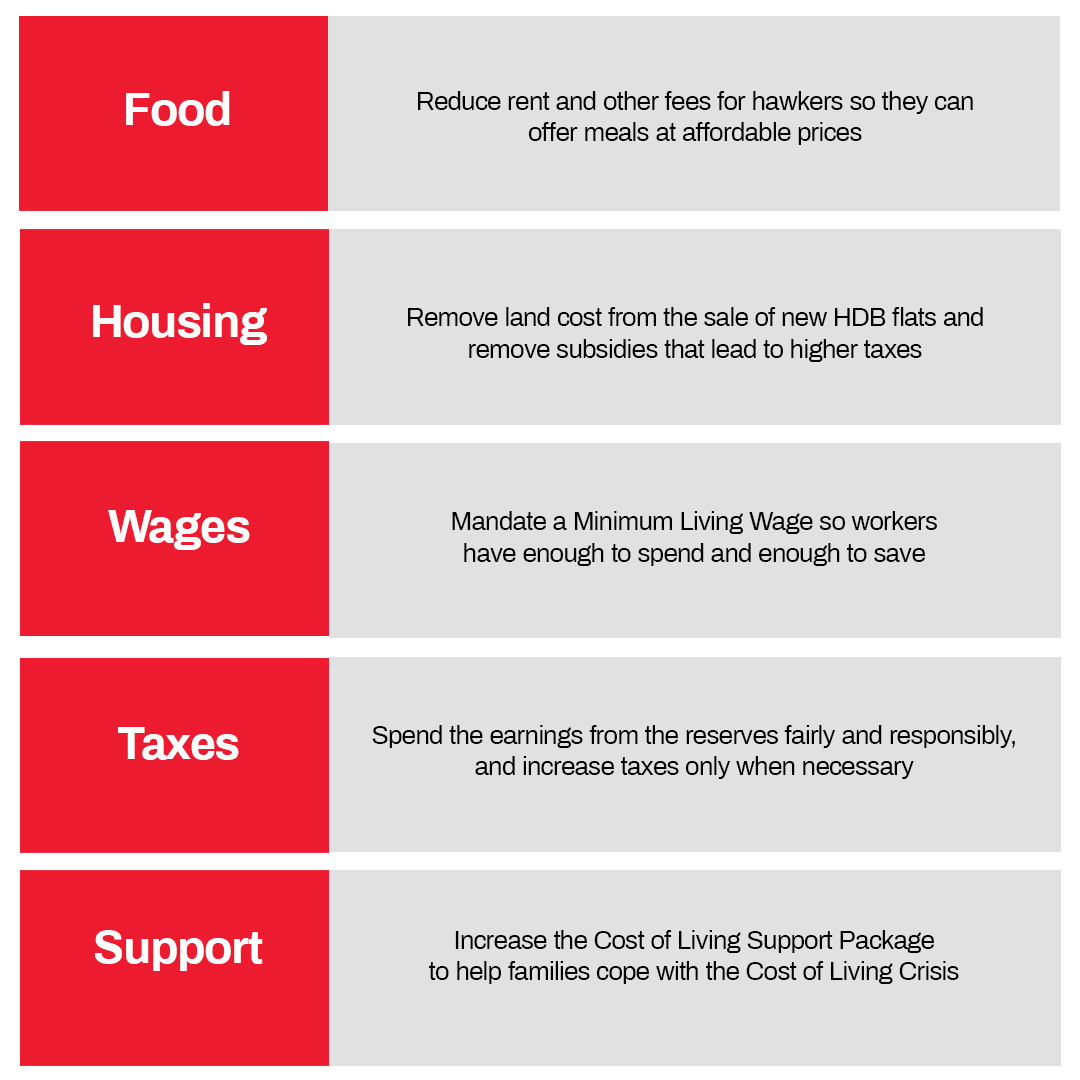
These reasons are why I propose a that the earnings from the reserves which are meant for use on present-day needs are used for present-day purposes.

Those earnings are around $50 billion a year, and the government has decided that 50%, or $25 billion will be used yearly.

Even with that $25 billion, the government can afford to pay for MediShield Life and CareShield Life premiums for all Singaporeans.

It can afford to increase the Cost-of-Living Package to give sustained financial support to families stuck in a difficult time, until they have become financially secure again.

This is not called “raiding” the reserves. 

Rather, it is using the collective savings of Singaporeans to unite Singaporeans, so that together we as a people can take pride that no one who is struggling will be abandoned and neglected.

That’s probably much more unifying than spending a collective 1 billion dollars to build expensive showpieces like the Founders Memorial and NS Square.


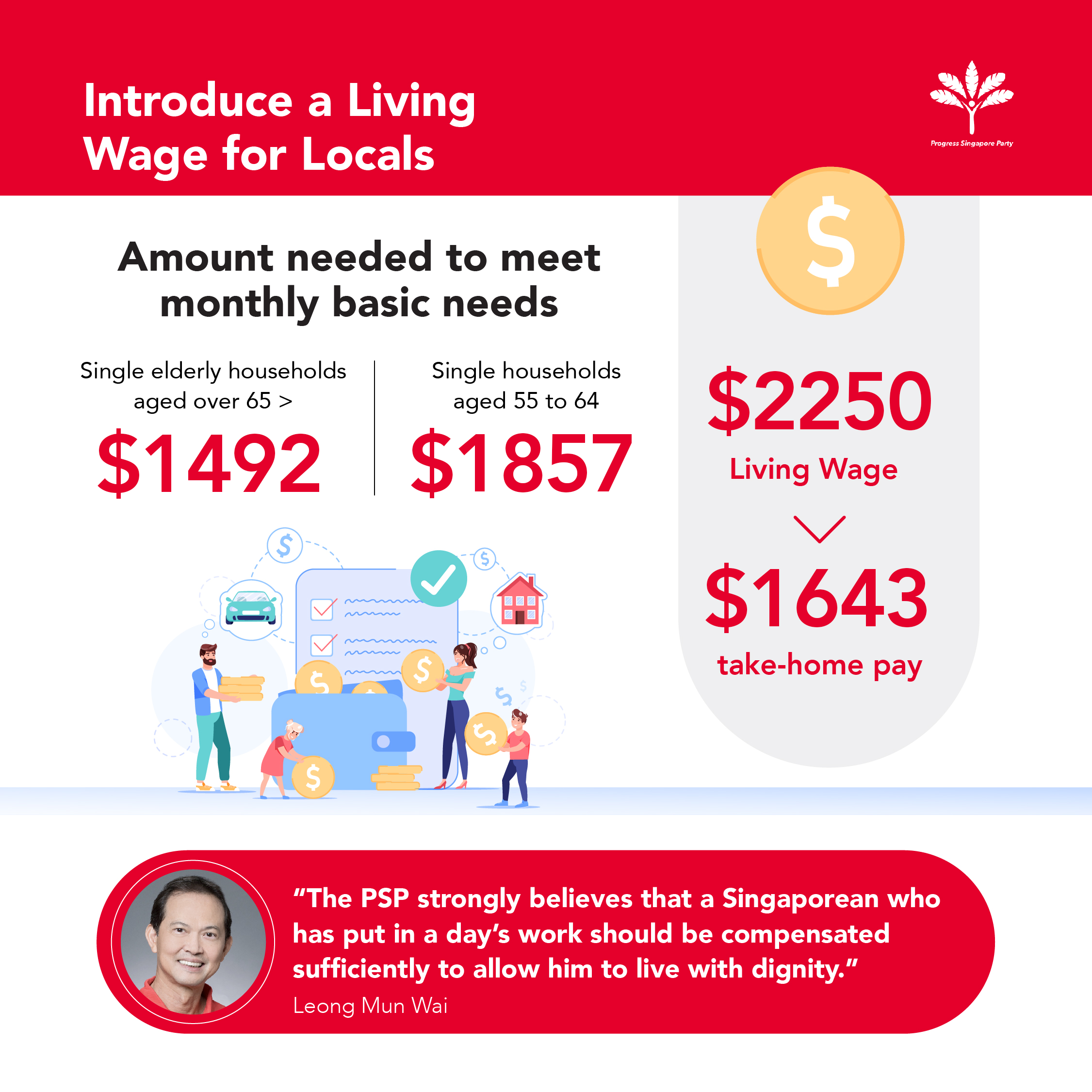
Mandate a $2250 Minimum Living Wage

A big problem with wages, especially for working class Singaporeans, is that their take-home pay has not been able to keep pace with inflation. This problem has been worsened by the current Cost of Living Crisis.

Since 2021, I have been calling for a Minimum Living Wage so that our everyday citizens have enough to cover their basic needs, can afford some small and simple luxuries, and have remainder to stash away as savings.

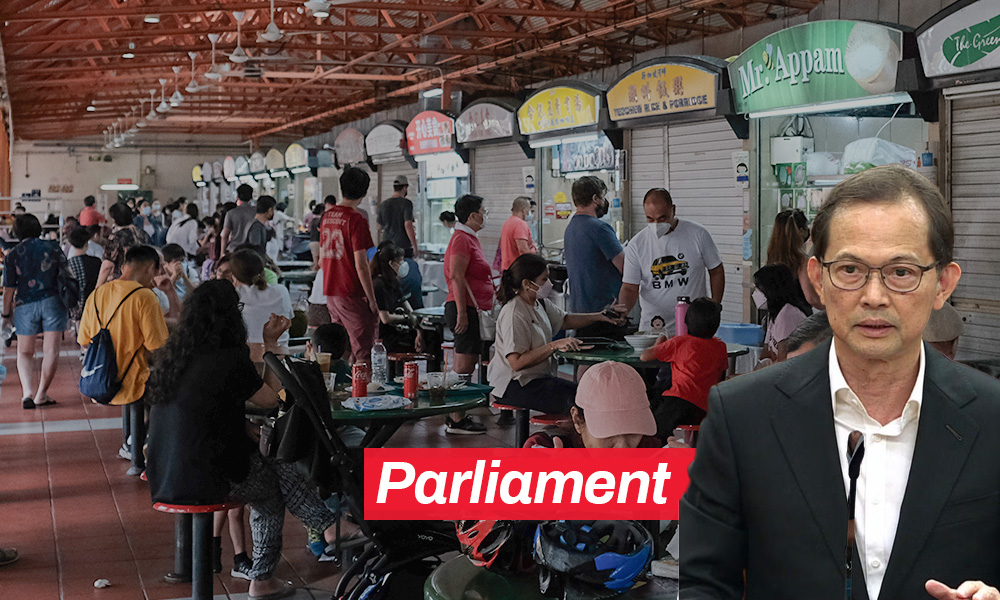
The SEHC scheme penalises both hawkers and everyday Singaporeans

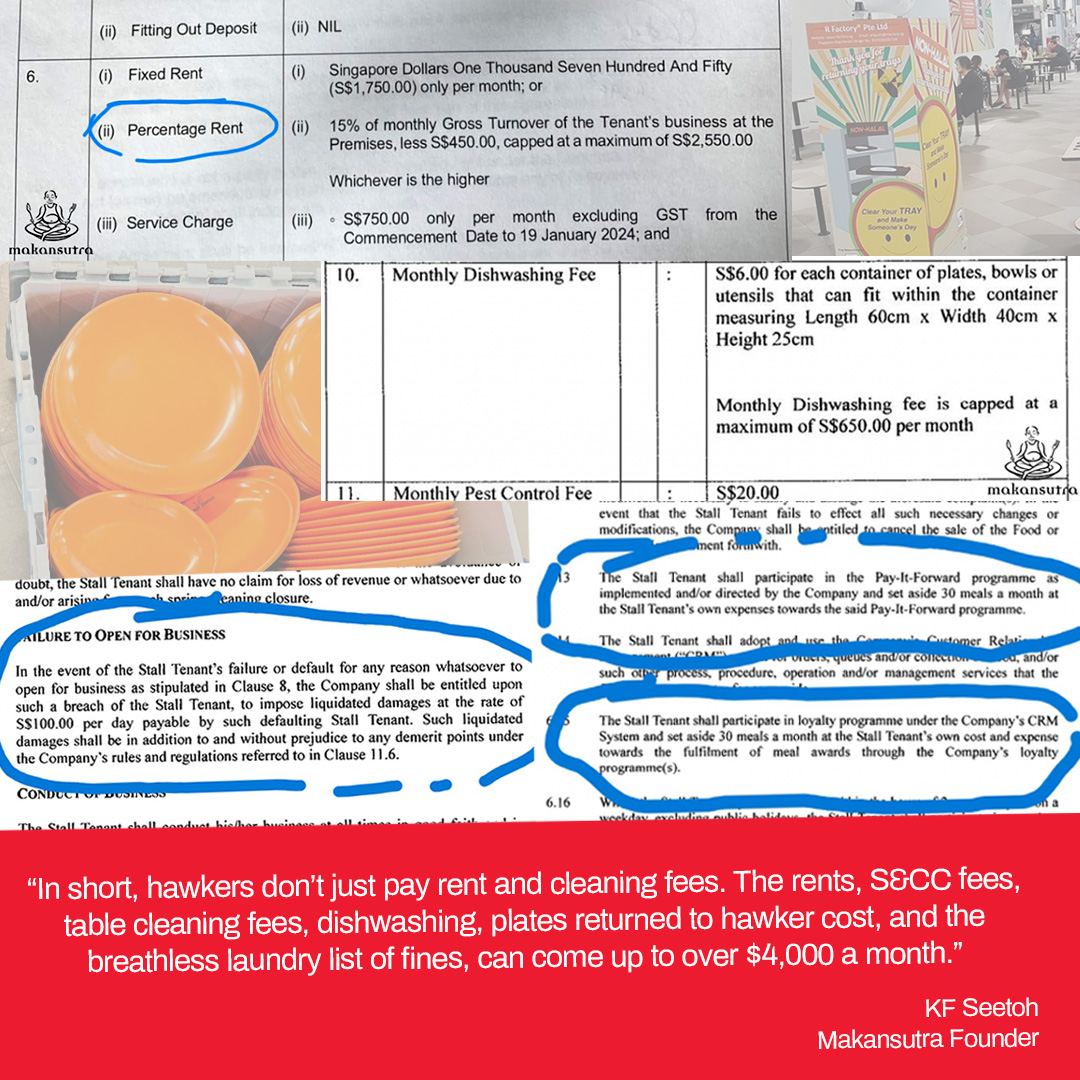
Prices of cooked food at hawker centres and coffeeshops have risen steeply in recent years. You can feel it for yourself. One of the core problems is the Socially-conscious Enterprise Hawker Centre (SEHC) scheme. Again the Government is using the market system to set a high price.

The median rent at Social Enterprise Hawker Centres (SEHCs) is about 5% higher than the median rent at NEA-operated hawker centres. In addition, what adds up to almost the rent itself is the extra fees for things like table-cleaning, dish-washing and other compliance costs.

All these costs add up to higher prices for everyday Singaporeans, who rely on hawker food as a low-cost- option for their daily meals.

On top of that, hawkers are still expected to offer budget meals at their own expense. It’s no wonder that the rate of hawkers giving up their stalls at SEHCs is about 2.5x that of a normal hawker centre stall, when we do a percentage points comparison.
 
This has been highlighted by my good friend KF Seetoh, who is a veteran in the local makan industry. He has also talked about it here.
 

Remove the SEHC scheme and help hawkers lower cost instead

The SEHC scheme, raises prices for hawkers and consequently hawker centre diners like you and me. If it expands further, it might kill off Singapore’s hawker culture.

This is why I propose to retire the SEHC scheme. In its place, I propose a Hawker Singapore scheme to reduce the costs and the burden on hawkers. This scheme mainly comprises:

(a) A monthly base rent for hawker stalls of $500 or 3% of gross turnover, whichever is higher to cut rental costs while charging the successful hawkers a bit more to sustain the hawker culture

(b) Each hawker stall is allowed to employ one Work Permit holder as a stall assistant to help with activities such as food preparation and clean-up

(c) No more forced Budget Meals. Instead, meal discounts for Pioneer, Merdeka and CHAS cardholders should be paid for the Government.

These cost-saving measures will have a ripple effect across hawker centres and coffeeshops, helping to tame price increases.

Lowering Cost of New HDB Flats

Lowering the cost of overpriced new housing developments has such a significant impact on cost of living, our retirement savings, and the longevity of born-and-bred Singaporeans that I’ve devoted a whole section here to it alone.

Centred around removing land cost from the sale of new HDB flats, I’ll show you why this is an important reform, and how it will save families some $300,000 in costs so they can really build a home (not just a house) and save effectively for retirement!

Let's fix things for our middle-class and working class Singaporeans

The Cost of Living Crisis will fester and worsen if we do not address problems now with concrete, lasting solutions.

This is why I’ve proposed these policy reforms.

When I was a child, my parents struggled to make ends meet. Luckily, there were Samsui Women who, despite being just as poor, lent them money to care for my siblings and me.

I will never forget their selflessness (and the durians they shared with me sometimes).

They are a key reason behind my decision to become a politician – to improve the quality of life of our everyday Singaporeans. 

If this is just as important to you, give me your support and let’s fix things.


Speaking up against the government's overtaxing and overcharging