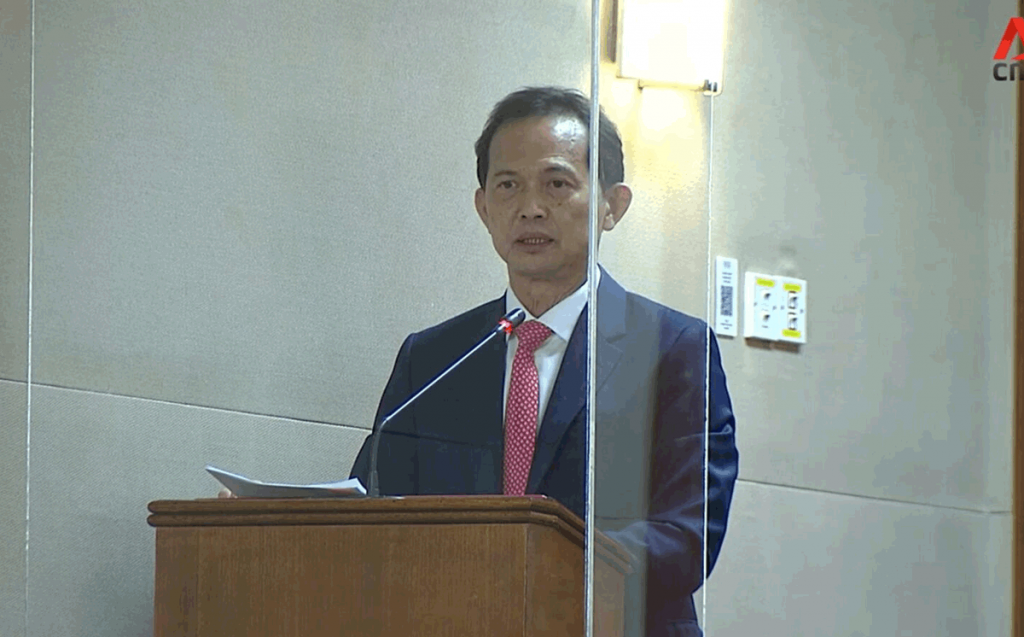
Yesterday in Parliament, we devoted one hour of the total one and a half hour allotted for Question Time (QT) to questioning the Allianz/Income Insurance deal. In Parliament, issues are dealt with through channels such as Question Time, Ministerial Statements (MS) and Motions. There is no debate during QT, and only some parliamentarians get a chance to ask questions because of the time limit. I was one of the first to be called and I was given two opportunities to speak.
The one hour devoted to Income Insurance is quite unusual which suggests how important this issue is to Singaporeans. Yet one hour was hardly enough to discuss such an important issue. It would have been better if the two officeholders – Second Minister for Finance and Deputy Chairman for MAS, Mr Chee Hong Tat and Minister of State for Culture, Community and Youth, Mr Alvin Tan, had made a joint Ministerial Statement so that there would be more time for questioning.
The key question is whether Income can continue to perform its social mission, and in my opinion, it is undeniable that if and when Allianz succeeds in acquiring a 51% stake, NTUC will lose control over Income in the long term. This is commercial reality, period. Minister Chee expressed that MAS will hold Income and Allianz to account to “their commitments that they have both made to ensure that the terms and conditions of the existing insurance contracts will have no change”, but what is the definition of “change”? Is lowering the return on an endowment policy justified by a certain market outlook considered a change? And how long is this commitment? Most importantly, are such commitments legally binding?
MOS Alvin Tan mentioned that “for many insurance products, Income does not always offer the lowest prices compared to other insurers”. I told him that this was not the point because Singaporeans still draw comfort from knowing that Income will be there in uncertain times. Just like Singaporeans feel secure because FairPrice will be there when there is a food crisis although FairPrice does not provide the cheapest groceries now.
In the end, I stand corrected, but I figured out that what the two officeholders were saying was that Income needs to obtain the capital to compete and survive. That is a prerequisite for Income to continue to fulfil its social mission.
However, Singaporeans continue to want an insurance company of last resort, an insurance company who can anchor our needs if and when other foreign companies try to exploit us. Because of active acquisition of our local insurance companies in recent years, we will be left with Great Eastern Life as our only local insurance company if Income is acquired by Allianz. Since Great Eastern is a private company, we also may not be able to ask it to be the anchor when the need arises.
Based on my over thirty years of capital market experience, I would also like to raise other questions on the process and the rationale of the share sale to Allianz.
Firstly, what were the criteria used in selecting the strategic partners (investors)? Was it to maximise the profit for NTUC Enterprise or to maximise the sum of the long term private and social benefits for Singapore and Singaporeans?
Secondly, the offer price which is only 37% above the book value does not seem to be a very attractive one. It appears to be more favourable to Allianz which will gain control over $30 billion of assets under management by spending $2.2 billion.
While I am confident that the deal with Allianz has been negotiated in good faith, I believe that it is possible for Income to remain majority-owned by Singaporeans and continue to grow its business through a combination of fund raising by offering minority stake(s) to one or a few foreign insurance companies and doing an IPO in Singapore.
If what Minister Chee said in Parliament is true – using his words “八字都还没一撇” – this deal is far from being a done deal. For the sake of the approximately 1.7 million Income policyholders (including myself), we hope this deal will be restructured so that NTUC Enterprise remains as the majority shareholder.
For Country For People